Wednesday, November 17, 2010
2010 Report on International Religious Freedom - Egypt

Sunday, May 9, 2010
Annual Report of the United States Commission on International Religious Freedom

Tuesday, February 16, 2010
Hussein Bikar
After graduating from Cairo's legendary
Faculty of Fine Arts in 1933, he became a teaching assistant the same year, then a Director of the Photography department. Bikar subsequently became a Professor in the Painting Department, and ultimately IT’S Chair.In 1945 He began his career in journalism
when he became one of the founding fathers of the prestigious Akhbar Al-Yom newspaper, doing drawings often accompanied by his own vernacular poems. Bikar became a towering figure on the Egyptian arts scene in late 1950.In January, 1952 he was instrumental in starting a weekly children's magazine Al-Sindbad, for which he was--along with "Sarookhan" and "Rakha"--its main cartoonist and illustrator.

In 1959, Bikar abandoned a teaching career to work in journalism as an illustrator and cartoonist: known for his sensuous, elongated lines, Bikar's work broke new ground in media art and was both accessible and sophisticated. He was also an outstanding musician, and during his career as an artist and critic at Al-Akhbar, he often sought out and encouraged young talents.

Bikar was also one of the founders of Cairo's Helwan Wax Museum. Over the years, Mr. Bikar had taught thousands of students at the Faculty of Fine Arts and became Egypt's most celebrated painter. His talent and artistic excellence became recognized worldwide.
The Helwan Wax Museum is a small public museum located in the Cairo, Egypt suburb of Helwan, close to the Ain Helwan Metro station. It contains exhibits of wax sculptures demonstrating important figures from Egyptian history and idealized traditional Egyptian culture.
Bikar, has been very much in the lime light as most publications in Egypt have been dedicating special sections to pay tribute to a long and distinguished career.
Bikar was honored with several awards including, the State Merit award in 1978, the Merit Medal award in 1980, Finally in June 2000 the Presidential Award from the Egyptian President Mr. Mubarak. He donated the full LE 100,000 of his prize to the Children's Cancer Hospital in Cairo.
Bikar became attracted to the Baha'i Faith in the 1930s and accepted it shortly after as his religion. He became a staunch supporter of its Institutions, and upholder of its principles. He also served on its key administrative functions. In the 1980s He was repeatedly interrogated and arrested simply because he was a Baha'i. Despite his numerous contributions to Egyptian Society, he died without having access to an Egyptian identity card because of his beliefs in the Baha’i Faith.
Bikar is widely regarded as a classic of modern Egyptian painting. Selections from his work can be seen at the Egyptian Modern Art Museum in Gezira, Cairo and the local museum of El-Gouna
El-Gouna
El Gouna is a tourist resort, developed and owned by Orascom Hotels and Development, dating from about 1990, It is located on the Red Sea in Egypt, 22 km north of Hurghada International Airport.
"I opened a window for hope to seep onto a dark soil a dough mixed with blood and a martyr The setting sun glimpsed through a crack in the prison wall through the wire and the iron it crept and there my vision started All at once I looked up a flight of pigeons filled the distance As though someone was celebrating a feast unveiling a happiness I praised the ways of God transforming the ancient a new this land, this Egypt awakens too, from old decrepit age, sheds all wrinkles and is again a youthful bride."

Hussein Bikar

موال ربيعي فتحت شباك الأمل على ارض سمرة معجونة بدم الشهيد ولمحت شمس الأصيل مسجونة جوه قفص من سلك وحديد وفجأة بصيت لفوق لقيت أسراب الحمام مليا القريب والبعيد وفرحانة بالوشوش اللي بتبنيها وكأنه مهرجان أو عيد قلت سبحانك يارب قادر تبدل العتيق بالجديد وتصبح مصر عروسه زمانها شباب من غيرتجاعيد
حسين بيكار
Thursday, May 21, 2009
Issuing birth certificates for Two Egyptian Baha'is
This follows the decree issued about a month ago by the Interior Minister of Egypt Habib Adli, to amend the Civil Status Law regarding the issuance of identity documents, such as birth certificates and ID cards, for people following religions not officially recognized by the Egypt authority.
Dr. Rauf Hindi Haleem, the father of the two children, has said that the birth certificates for his twins Emad and Nancy took so long now they are sixteen years old.He said the twins were left for so long with no official documents although they had Egyptian Baha'i parents and Egyptian Baha'i grandparents.
"I will soon start taking the necessary procedures to let them have their national ID cards, as our country's nationality is something we cherish" he added.
Monday, May 18, 2009
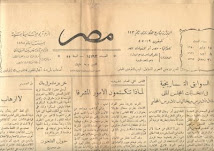
The Baha'i Faith in Egypt - Egyptian Magazine Last Hour 1950
وتوجد بالمقاله ايضا صوره لمبنى المحفل البهائى فى القاهرهكاتب هذه المقاله هو الاستاذ احمد زين العابدين وفى خاتمه المقاله يقول هذه هى البهائيه دين جديد يدعو الى السلام ويقول البهائيون ان بهاء الله هو رسول الله فى الارض وان هناك علامات على ظهوره فى التوراه والانجيل والقران
لقد بلغ اتباع الدين البهائى خمسه ملايين شخص فى جميع انحاء العالم

This article was published in "Last Hour" an Egyptian magazine dated August 9, 1950 under the name "The Baha'i Faith call for Peace" there is a brief introduction about the Baha'i Faith, Picture of the Baha'i Center in Cairo, and a picture of Abdul Baha.
Wednesday, April 15, 2009
Decree Ends ID Bias against Egyptian Baha’is
Identification documents, especially identity cards and birth certificates, are mandatory for all Egyptians and necessary to obtain access to education, employment, family life, registration and immunization of children, as well as most basic daily activities such as opening a bank account, obtaining a driver’s license, receiving pension or inheritance, or engaging in business transactions.

"
كما ينص القرار على بدء العمل بالتعديل من اليوم التالي لتاريخ نشره.
Thursday, April 2, 2009
Muslims Villagers attack homes of Baha'is in Egypt
Assaults committed against Egyptian Baha'is over the past several days in the southe
rn City of Sohag. In a complaint filed in April 02, 2009 the Egyptian Baha'is called for the investigation to include those responsible for the direct incitement to the assaults and asked that the matter be referred urgently to criminal trial.The attacks began on Saturday evening, March 28, 2009 in the village of al-Shuraniya, located in the Maragha district of Sohag, when dozens of Muslims village residents gathered outside of the homes of Baha'i citizens in the village and began chanting, "There is no God but God, Baha'is are the enemies of God." Those assembled then began pelting the houses with rocks, breaking windows and attempting to break in the Baha'i Houses.
On March 31, 2009 at approximately 7 pm, the attacks escalated when some Muslims residents of the village threw improvised firebombs and Molotov cocktails at the homes of the five Baha'i families living in the village, leading to the partial destruction of the houses.
The Baha'is said that the attackers broke or disabled the water connections to their homes to prevent them from putting out the fires. The Muslims attackers also broke into the Baha'is houses, vandalizing property inside and stealing some electrical appliances and livestock.
The police arrived during the attacks and dispersed the Muslim attackers; there was no information that any of the attackers had been arrested.
In April 01, 2009 the Egyptian police ordered the remaining Baha'is in the village to leave immediately and did not allow them to return to their homes to collect clothing, medicine, schoolbooks, money, or other necessities. Information gathered indicates that all Baha'is have forced to leave their own houses and move to another City as of the evening of 1 April.
The assaults on the Baha'is in al-Shuraniya began after an episode of the program "al-Haqiqa," aired on TV Channel Dream 2 on March 28, 2009 which discussed the Baha'i New Year celebration . The program featured a Baha'i from al-Shuraniya and Baha'i activist and dentistry professor Dr. Basma Musa. Also participating in the program a Muslim Journalist Gamal Abd al-Rahim that pronouncing all Baha'is as apostates and urges their killing.
Gamal Abd al-Rahim during the program, said referring to Dr. Basma, "This one should be killed." On March 31, only hours before the homes of the Baha'is were torched in al-Shuraniya, al-Gomhouriya an Egyptian Newspaper published an article by Gamal Abd al-Rahim in which he praised the residents of al-Shuraniya for stoning the homes of Baha'is in the village in the preceding days. He considered these crimes to be evidence of al-Shuraniya residents’ "protectiveness of their Islam religion and beliefs."
The Muslim leader, who claimed responsibility for the attack, is named Mohammad Youssry Mohammad. He identifies himself as the secretary of the youth committee of the village's National Party (al- Hezb al-Watany) and a teacher in the Islam religious institute of the village.
Update: Media coverage
El Gazira Channel
Tuesday, March 17, 2009
Egyptian Supreme court removes barriers to Official ID Cards for Egyptian Baha'is
and opening the door to a new level of respect for religious privacy in Egypt.The Supreme Administrative Court dismissed an appeal by two Muslim lawyers that sought to prevent implementation of a lower court ruling last year that said Baha'is can leave blank the religious classification field on official documents, including all-important identity cards and birth certificates.
"We are pleased that the court has finally put this matter to rest, removing any possible excuse that would prevent the government from issuing official documents to Egyptian Baha'is," said Bani Dugal, the principal representative of the Baha'i International Community to the United Nations.
"Our expectation now is that the government will move swiftly to bring this ruling into practice and, at long last, grant Baha'is the essential right that all citizens have of possessing proper documents."
Hossam Bahgat, director of the Egyptian Initiative for Personal Rights (EIPR), said the ruling actually goes far beyond the issue of rights for Egyptian Baha'is.
"This is the first time that the Supreme Administrative Court has found that any Egyptian has the right to keep their religious convictions private, even if the state does not recognize their belief system," said Mr. Bahgat, whose organization handled legal representation for Baha'is in court.
"The final ruling is a major victory for all Egyptians fighting for a state where all citizens enjoy equal rights regardless of their religion or belief," he said.
Mr. Bahgat said that because the Supreme Administrative Court is the highest court on such matters, there can be no further appeal to this case - and that, therefore, there should be no delay in the government's implementation of the new policy.
"The government policy that justified mistreatment of Egyptian Baha'is has now been firmly and finally struck down," he said.
For nearly five years, since the government began introducing a computerized identity card system that locked out all religious classifications except Islam, Christianity, and Judaism, Baha'is have been unable to get documents essential to day-to-day life. Among other things, they have been blocked from obtaining education, financial services, and even health care in government hospitals.
In April 2006, a lower administrative court upheld the right of Baha'is to be explicitly identified on official documents. But in December that year, the Supreme Administrative Court reversed that decision.
In a compromise, Baha'is proposed using a dash or the word "other" on documents, instead of being forced to list themselves as Muslim, Christian, or Jewish, and, on 29 January 2008, a lower court again ruled in their favor. But then two Muslim lawyers, who oppose anything that might be seen as even tacit recognition of the Baha'i Faith, filed an appeal.
In response, government officials took a "go slow" attitude on implementing the lower court ruling, saying they wanted to wait until all legal issues were cleared up.
The ruling today came in the case of 14-year-old twins Imad and Nancy Rauf Hindi who have been deprived of birth certificates and were unable to legally attend school in Egypt.
In recent weeks, several other cases involving Baha'is have been likewise resolved in their favor. But the Rauf Hindi twins' case was the final case to be settled.
حكم نهائي بمصر يسمح للبهائيين باستخراج هويات دون ذكر الديانة
واستند محامو المبادرة المصرية في الدعوى إلى أن إجبار "البهائيين" على ادعاء اعتناق الإسلام أو المسيحية بالمخالفة للحقيقة ينتهك حقوقهم في كل من حرية المعتقد والخصوصية والمساواة، فضلاً عن مخالفته لأحكام الشريعة الإسلامية، ورغم أن وزارة الداخلية ـ والتي صدر ضدها الحكم ـ لم تقم بالطعن عليه، إلا أن عدداً من المحامين تقدموا بطعون ضد الحكم واستشكالات لوقف تنفيذه. وعلى مدى أكثر من عام استندت وزارة الداخلية إلى هذه الطعون من أجل الامتناع عن تنفيذ حكم المحكمة بإصدار الأوراق اللازمة للبهائيين المصريين. وقال المسؤول القانوني للمبادرة المصرية للحقوق الشخصية عادل رمضان، والذي قام بتمثيل البهائيين في الدعوى "إن أهمية الحكم الصادر اليوم لا تتمثل فقط في إنهاء معاناة المئات من المواطنين البهائيين الذين اضطروا للدخول في معركة قضائية طويلة وغير ضرورية ضد سياسة حكومية تعسفية وتمييزية، بل يعد قرار المحكمة انتصاراً لكل المصريين المؤمنين بحق جميع المواطنين في المساواة أمام القانون بغض النظر عن معتقداتهم الدينية". وأضاف رمضان: "بعد أن رفض القضاء جميع الاستشكالات والطعون المقامة ضد الحكم الصادر لمصلحة البهائيين لم يعد في جعبة وزارة الداخلية أي حجج إضافية للمماطلة في إنهاء هذه السياسة التعسفية، والتي قضت المحكمة الإدارية العليا بضرورة وقفها فوراً ودون إبطاء". ويشار إلى أنه مع بدء العمل بشهادات وبطاقات الرقم القومي الصادرة عبر الحاسب الآلي في عام 2000 قررت مصلحة الأحوال المدنية التوقف عن إصدار أو تجديد الوثائق الرسمية للمصريين البهائيين ما لم يقبلوا بتغيير ديانتهم المثبتة في السجلات إلى إحدى الديانات الثلاث المعترف بها رسمياً. وفي عام 2004 تطورت هذه السياسة إلى إقدام وزارة الداخلية على مصادرة شهادات ميلاد وبطاقات تحقيق شخصية من مواطنين بهائيين تثبت اعتناقهم للبهائية وولادتهم لآباء وأجداد بهائيين ورفض إعادتها دون تغيير الديانة المثبتة فيها. وفي عام 2004 لجأ بعض البهائيين الذين تمت مصادرة أوراقهم الرسمية دون وجه حق إلى القضاء الإداري للمطالبة بإعادة أوراقهم المصادرة أو تجديد وثائقهم التي انتهت صلاحيتها، وفي أبريل 2006 أصدرت محكمة القضاء الإداري حكماً لصالحهم قضى بحقهم في إثبات اعتناقهم للبهائية في الأوراق الثبوتية، إلا أن وزارة الداخلية قامت بالطعن على هذا الحكم ونجحت في إلغائه عبر حكم للمحكمة الإدارية العليا في ديسمبر 2006 وفي يناير 2007 لجأ البهائيون من جديد إلى محكمة القضاء الإداري مطالبين بحقهم في الحصول على وثائق ثبوتية دون ذكر أي ديانة، وهو المطلب الذي أيدته محكمة القضاء الإداري في يناير 2008 وألزمت مصلحة الأحوال المدنية بإصدار الأوراق المذكورة مع ترك خانة الديانة خالية أو وضع علامة (ــ) أمامها. وأعلنت وزارة الداخلية عقب صدور هذا الحكم أنها لن تقوم بالطعن عليه أمام المحكمة الإدارية العليا، غير أنها لن تقوم بتنفيذه حتى يفصل القضاء في الطعون التي أقامها عدد من المحامين الإسلاميين ضد الحكم الصادر لمصلحة البهائيين. وقد تسبب عجز البهائيين عن استخراج أو تجديد بطاقات تحقيق الشخصية وشهادات الميلاد على مدى الأعوام الثمانية الماضية في صعوبات بالغة لهؤلاء المواطنين الذين يقدر عدهم بنحو 2000 مواطن، حيث لا يسمح دون هذه الوثائق بتسجيل المواليد أو تطعيمهم ضد الأوبئة، أو الالتحاق بالمدارس أو الجامعات، أو الحصول على عمل، أو غير ذلك من الخدمات الأساسية.
Monday, March 16, 2009
The Egyptian Supreme Court allowed the Baha'is to extract their ID cards without mentioning religion
The Supreme Administrative Court issued in the Council of State in Egypt on Monday, a final ruling supporting the right of Egyptian Bahais to have national number Identification cards and birth certificates without mentioning any religion.
The ruling supported a similar provision had been made by the Administrative Judiciary Court "least" in January 2008. may not be forcing a conversion to the Baha'i religions officially recognized by Islam, Christianity and Judaism as a condition for access to compulsory identity cards.
The Egyptian Initiative for Personal Rights, which holds the Case, and said in a statement: "The ruling puts an end to the conflict, a long five years and provides for the abolition of government policy based on forcing Baha'is to change their beliefs or lying on them in exchange for the papers necessary for access to all services and the rights guaranteed to them as Egyptian citizens.
"Based on the Egyptian initiative, lawyers in the case that forcing the bahai's on the claim of conversion to Islam or Christianity in violation of the truth in violation of their rights to freedom of belief, privacy and equality, as well as the violation of the provisions of Islamic Sharia law, although the Interior Ministry, which was issued against the ruling did not challenge Accordingly, a number of lawyers filed appeals against the court ruling to stop its implementation, and for over a year based on the Ministry of the Interior to these appeals to refrain from implementing the rule of the court to issue the necessary papers to the Egyptian Baha'is.The legal officer of the Egyptian initiative for personal rights Adel Ramadan, which represented the Baha'is in the case: "The importance of this ruling is not only to ending the suffering of hundreds of citizens of Baha'is who have been forced to engage in a lengthy court battle and unnecessary against government policy of arbitrary and discriminatory, but the decision is Court victory for all the right of all Egyptians who believe in the equality of citizens before the law regardless of their religious beliefs. "Ramadan said: "After that the refusal to eliminate all appeals against that ruling in favor of the Baha'is, in the kit is no longer the Ministry of the Interior cannot make any additional arguments to the delays in the termination of this policy is arbitrary, which the Supreme Administrative Court ruled that the need to be stopped immediately and without delay."
It should be noted that with the begining of the certificates and national number Identification cards which is issued through the of computers in 2000 and the Department of Civil Status decided to stop the issue or renewal of official documents for the Egyptian Baha'is until the accept to change the religion established in the records to one of the three religions officially recognized which are : (( Muslim, Christian or a jew )) In 2004 this policy evolved by the Ministry of the Interior for the confiscation of birth certificates and identification cards of the citizens to prove their conversion.
In 2004 this policy evolved by the Ministry of the Interior for the confiscation of birth certificates and identification cards of the citizens which prove their conversion to the Bahai faith and their Birth from bahai parents and grandparents and refused to return them without changing the religion in which installed.In 2004 some Baha'is who had been seized without official papers to used the Administrative Judiciary Court to demand the reinstatement or renewal of their papers confiscated their documents which are expired, and in April 2006 the Administrative Court passed a ruling for the bahai to have the right to prove their conversion to the Bahai faith in the papers, but the Ministry gave gave the court an appeal to this provision and succeeded in abolishing it through the rule of the Supreme Administrative Court in December 2006.
In January 2007 the bahai 's went back again to the Administrative Judicial Court, demanding the right to obtain identity documents, without any religion, which has been endorsed by the Administrative Judiciary Court in January 2008, and ordered the Department of Civil Status to issue those papers with leaving the field of religion or a free sign ( ) before them, the Interior Ministry announced after the ruling, it will not appeal before the Supreme Administrative Court, but it will not be implemented until the elimination of separate appeals by a number of lawyers against the rule of the Islamists in for the Baha'is.the inability of the Bahai's has caused the extraction or renewal of identity cards and birth certificates over the past eight years, serious difficulties for those citizens who appreciated the promise of about two thousand people, because it not allowed to make birth registration or vaccinated against epidemics, or go to school or university, or access to employment, or other basic services without those civil papers.
بعد صراع قضائي استمر لخمسة أعوام: حكم نهائي وحاسم للإدارية العليا بحق البهائيين في استخراج وثائقهم الرسمية دون إجبارهم على تغيير معتقدهم
بيان المبادرة المصرية للحقوق الشخصية
رحبت المبادرة المصرية للحقوق الشخصية بالحكم النهائي الصادر اليوم عن المحكمة الإدارية العليا بتأييد حق البهائيين المصريين في الحصول على بطاقات الرقم القومي وشهادات الميلاد دون ذكر أي ديانة. وقالت المنظمة إن الحكم يضع نهاية لصراع قضائي دام خمسة أعوام ويقضي بإلغاء السياسة الحكومية القائمة على إجبار البهائيين على تغيير معتقداتهم أو الكذب بشأنها في مقابل الحصول على الأوراق الثبوتية اللازمة لحصولهم على كافة الخدمات والحقوق المكفولة لهم بوصفهم مواطنين مصريين.
وقال عادل رمضان، المسئول القانوني للمبادرة المصرية للحقوق الشخصية، والذي قام بتمثيل البهائيين في الدعوى: "إن أهمية الحكم الصادر اليوم لا تتمثل فقط في إنهاء معاناة المئات من المواطنين البهائيين الذين اضطروا للدخول في معركة قضائية طويلة وغير ضرورية ضد سياسة حكومية تعسفية وتمييزية، بل يعد قرار المحكمة انتصاراً لكافة المصريين المؤمنين بحق جميع المواطنين في المساواة أمام القانون بغض النظر عن معتقداتهم الدينية."
ويقضي حكم اليوم (في الطعن رقم 10831 لسنة 54 قضائية) بتأييد حكم مماثل كانت قد أصدرته محكمة القضاء الإداري في يناير 2008 بعدم جواز إجبار البهائيين على اعتناق إحدى الديانات المعترف بها رسمياً ـ وهي الإسلام والمسيحية واليهودية ـ كشرط لحصولهم على الوراق الثبوتية الإلزامية. وقد استند محامو المبادرة المصرية في الدعوى إلى أن إجبار البهائيين على ادعاء اعتناق الإسلام أو المسيحية بالمخالفة للحقيقة ينتهك حقوقهم في كل من حرية المعتقد والخصوصية والمساواة، فضلاً عن مخالفته لأحكام الشريعة الإسلامية. ورغم أن وزارة الداخلية ـ والتي صدر ضدها الحكم ـ لم تقم بالطعن عليه، إلا أن عدداً من المحامين تقدموا بطعون ضد الحكم واستشكالات لوقف تنفيذه. وعلى مدى أكثر من عام استندت وزارة الداخلية إلى هذه الطعون من أجل الامتناع عن تنفيذ حكم المحكمة بإصدار الأوراق اللازمة للبهائيين المصريين.
وأضاف عادل رمضان: "بعد أن رفض القضاء جميع الاستشكالات والطعون المقامة ضد الحكم الصادر لصالح البهائيين لم يعد في جعبة وزارة الداخلية أي حجج إضافية للمماطلة في إنهاء هذه السياسة التعسفية، والتي قضت المحكمة الإدارية العليا بضرورة وقفها فوراً ودون إبطاء."
خلفية
مع بدء العمل بشهادات وبطاقات الرقم القومي الصادرة عبر الحاسب الآلي في عام 2000 قررت مصلحة الأحوال المدنية دون سند قانوني التوقف عن إصدار أو تجديد الوثائق الرسمية للمصريين البهائيين ما لم يقبلوا بتغيير ديانتهم المثبتة في السجلات إلى إحدى الديانات الثلاث المعترف بها رسمياً. وفي عام 2004 تطورت هذه السياسة إلى إقدام وزارة الداخلية على مصادرة شهادات ميلاد وبطاقات تحقيق شخصية من مواطنين بهائيين تثبت اعتناقهم للبهائية وولادتهم لآباء وأجداد بهائيين ورفض إعادتها دون تغيير الديانة المثبتة فيها.
وفي عام 2004 لجأ بعض البهائيين الذين صودرت أوراقهم الرسمية دون وجه حق إلى القضاء الإداري للمطالبة بإعادة أوراقهم المصادرة أو تجديد وثائقهم التي انتهت صلاحيتها. وفي إبريل 2006 أصدرت محكمة القضاء الإداري حكماً لصالحهم قضى بحقهم في إثبات اعتناقهم للبهائية في الأوراق الثبوتية، إلا أن وزارة الداخلية قامت بالطعن على هذا الحكم ونجحت في إلغائه عبر حكم للمحكمة الإدارية العليا في ديسمبر 2006.
وفي يناير 2007 لجأ البهائيون من جديد إلى محكمة القضاء الإداري مطالبين بحقهم في الحصول على وثائق ثبوتية دون ذكر أي ديانة، وهو المطلب الذي أيدته محكمة القضاء الإداري في يناير 2008 وألزمت مصلحة الأحوال المدنية بإصدار الأوراق المذكورة مع ترك خانة الديانة خالية أو وضع علامة (ــ) أمامها. وأعلنت وزارة الداخلية عقب صدور هذا الحكم أنها لن تقوم بالطعن عليه أمام المحكمة الإدارية العليا، غير أنها لن تقوم بتنفيذه حتى يفصل القضاء في الطعون التي أقامها عدد من المحامين ضد الحكم الصادر لصالح البهائيين.
وقد تسبب عجز البهائيين عن استخراج أو تجديد بطاقات تحقيق الشخصية وشهادات الميلاد على مدى الأعوام الثمانية الماضية في صعوبات بالغة لهؤلاء المواطنين الذين يقدر عدهم بحوالي ألفي مواطن، حيث لا يسمح بدون هذه الوثائق بتسجيل المواليد أو تطعيمهم ضد الأوبئة، أو الالتحاق بالمدارس أو الجامعات، أو الحصول على عمل، أو غير ذلك من الخدمات الأساسية.
تعقيب
هذا الحكم هو انتصار لكل المصريين الذين يؤمنون بمبادئ حقوق الانسان ،واحقية كل فرد فى التمتع بجميع حقوق المواطنة بغض النظر عن جنسه او معتقده او دينه
هذا الحكم هو انتصار لكل من يؤمن بالدفاع عن حقه بالطرق القانونية السليمة والصبر حتى ينال مراده كما فعل البهائيون المصريون
هذا الحكم سيفتح الباب لجميع المظلومين بان يطالبوا بحقوقهم بشجاعة واحترام ودأب عن طريق الطرق المشروعة
تهنئة احترام وتبجيل للقضاء المصري وكل من دافع عن هذه القضية ، ونتمنى ان يتم تنفيذ الحكم باسرع وقت، فيكفى خمس سنوات من المعاناة
Friday, February 27, 2009
U.S. Department of State - 2008 Human Rights Report: Egypt
The National Democratic Party (NDP) has governed the Arab Republic of Egypt, which has a population of approximately 82 million, since the party's establishment in 1978. The NDP, which continued to dominate national politics by maintaining an overriding majority in the popularly elected People's Assembly (PA) and t
he partially elected Shura (Consultative) Council, derives its governing authority from the 1971 constitution and subsequent amendments. Executive authority resides with the president and the cabinet. In 2005 President Hosni Mubarak won a fifth consecutive six-year term with 88 percent of the vote in the country's first presidential election, which was marred by low voter turnout and charges of fraud. The civilian authorities did not always maintain effective control of security forces, who committed numerous, serious abuses of human rights.
The government's respect for human rights remained poor, and serious abuses continued in many areas. The government limited citizens' right to change their government and continued a state of emergency that has been in place almost continuously since 1967. Security forces used unwarranted lethal force and tortured and abused prisoners and detainees, in most cases with impunity. Prison and detention center conditions were poor. Security forces arbitrarily arrested and detained individuals, in some cases for political purposes, and kept them in prolonged pretrial detention. The executive branch placed limits on and pressured the judiciary. The government's respect for freedoms of press, association, and religion declined during the year, and the government continued to restrict other civil liberties, particularly freedom of speech, including Internet freedom, and freedom of assembly, including restrictions on nongovernmental organizations (NGOs). Government corruption and lack of transparency persisted.
The government made significant and effective efforts to combat female genital mutilation (FGM). These efforts included education, outreach, and the passage and enforcement of legislation criminalizing FGM. In addition, courts issued the first two convictions on sexual assault charges.
The constitution provides for freedom of belief and the practice of religious rites; however, the government restricted the exercise of these rights. According to the constitution, Islam is the official state religion, and Shari'a (Islamic law), the primary source of legislation. Religious practices that conflict with the government's interpretation of Shari'a are prohibited.
Members of non-Muslim religious minorities officially recognized by the government generally worshiped without harassment and maintained links with coreligionists in other countries.
Members of religions not recognized by the government, particularly Baha'is, experienced personal and collective hardship. Religious groups seeking recognition must submit a request to the MOI, which determines whether, in its view, the group would pose a threat to national security or social order. The MOI also consults leading religious figures, particularly the pope of the Coptic Orthodox Church and the sheikh of Al-Azhar. The last official recognition of a religious group occurred in 1990. The government did not recognize marriages of citizens adhering to faiths other than Christianity, Judaism, or Islam, nor did it recognize conversions of Muslim-born citizens to other religions.
The law prohibited blasphemy and the "denigration of religions." Though there were no reported prosecutions, at least one Koranist was arrested and was being held without charges at year's end. The government prosecuted members of religious groups whose practices deviated from mainstream Islamic beliefs and whose activities were believed to jeopardize communal harmony.
The law bans Baha'i institutions and community activities and stripped Baha'is of legal recognition. The government continued to deny civil documents, including ID cards, birth certificates, and marriage licenses to members of the Baha'i community. The MOI requires identity card applicants to self-identify as a Jew, Christian, or Muslim. As a result, Baha'is faced difficulties in conducting civil transactions, including registering births, marriages, and deaths, obtaining passports, enrolling children in schools, and opening bank accounts. During the year Baha'is were compelled either to misrepresent themselves as Muslim, Christian or Jewish, or go without valid identity documents. Many Baha'is chose the latter course.
Traditional practices and some aspects of the law discriminated against religious minorities, including Christians and particularly Baha'is. The law requires non-Muslims to obtain a presidential decree to build a new place of worship. In addition, MOI regulations, issued in 1934 under the Al-Ezabi decree, specify a set of 10 conditions the government must consider before a presidential decree for construction of a new non-Muslim place of worship can be issued. The conditions include the requirement that the distance between a church and a mosque not be less than 100 meters (328 feet) and that approval of the neighboring Muslim community be obtained before a permit to build a new church may be issued.
You could read the whole report at: 2008 Human Rights Report: Egypt
Thursday, February 19, 2009
Commentary: Stop religious persecution in Iran - CNN
By Rainn WilsonSpecial to CNN It's a bit strange for me, to say the least; a comic character actor best known for playing weirdos with bad haircuts getting all serious to talk about the persecution of the fellow members of his religious faith.
Dear readers of CNN, I assure you that what I'm writing about is no joking matter or some hoax perpetrated by a paper-sellin', bear-fearin', Battlestar-Galactica obsessed beet farmer.
I am a member of the Baha'i faith. What is that, you ask? Well, long story short, it's an independent world religion that began in the mid-1800s in Iran. Baha'is believe that there is only one God and therefore only one religion.
All of the world's divine teachers (Jesus, Muhammad, Buddha, Moses, Abraham, Krishna, etc.) bring essentially the same message -- one of unity, love and knowledge of God or the divine.
This constantly updated faith of God, Baha'is believe, has been refreshed for this day and age by our founder, Baha'u'llah. There. Nutshell version.
Now, as I mentioned, this all happened in Iran, and needless to say the Muslim authorities did not like the Baha'is very much, accusing them of heresy and apostasy. Tens of thousands were killed in the early years of the faith, and the persecutions have continued off and on for the past 150 years.
They've been accused of all manner of things including being "spies for Israel," "insulting religious sanctities" and "propaganda against the Islamic Republic."
They've been held for a year in Evin Prison in Tehran without any access to their lawyer (the Nobel Laureate Shirin Ebadi) and with zero evidence of any of these charges.
When a similar thing happened in 1980, the national leadership of the Iranian Baha'i community disappeared. And this was repeated again in 1981.
In fact, since 1979, more than 200 Baha'is have been killed, holy places and cemeteries desecrated, homes burned, civil rights taken away and secret lists compiled of Baha'is (and even Muslims who associate with them) by government agencies.
It's bad right now for all the peace-loving Baha'is in Iran who want only to practice their religion and follow their beliefs. It's especially bad for these seven. Here's a link to their bios. They're teachers, and engineers, and optometrists and social workers just like us.
This thought has become kind of a cliché', but we take our rights for granted here in America. Imagine if a group of people were rounded up and imprisoned and then disappeared not for anything they'd done, but because they wanted to worship differently than the majority.
There is a resolution on the situation of the Baha'is in Iran being sent to Congress. Please ask your representatives to support it. And ask them to speak out about this terrible situation.
Thanks for reading. Now back to bears, paper and beets!
Saturday, February 14, 2009
Iranian professionals post public apology to Baha'is - February 6, 2009 - CNN
TEHRAN, Iran (CNN) -- A group of Iranian intellectuals released a public apology this week for what they say is a long history of the country's mistreatment of members of the Baha'i faith.The apology -- titled, "We are ashamed" -- was published on the Web site Iranian.com and was signed by 42 Iranian professionals, all of whom do not live in Iran.
"As Iranian human beings, we are ashamed for what has been perpetrated upon the Baha'is in the last century and a half in Iran," the letter says.
In the letter, the group detailed incidents of violence and discrimination that it says the Iranian government has perpetrated against Baha'is.
The Islamic republic has been condemned by human-rights activists and governments across the globe for its treatment of members of the Baha'i faith.
The Baha'i movement has said that six of its followers were arrested in January in Tehran, including one who works with Nobel peace laureate Shirin Ebadi, the lawyer and activist. Seven leaders of the group arrested in 2008 also remain in jail.
Members of Baha'i -- who say they are targeted in the predominantly Shiite nation because of their faith -- have faced arrests and other oppression over the years.
They say the persecution is part of a pattern that began in 1979. That's when the monarchy of the Shah of Iran was toppled and an Islamic republic was created.
Baha'i -- regarded as the largest non-Muslim religious minority in Iran -- claims to have 5 million members across the globe and about 300,000 in Iran.
The European Parliament passed a resolution in January that criticized Iran's treatment of Baha'is. The U.S. State Department also criticized Iran's treatment of Baha'i followers in a report last year.
For more details visit: We are ashamed!
{هذه العريضة كتبتها مجموعة من الأكاديميين، والمؤلفين، والفنانين، والصحفيين، والناشطين الإيرانيين المقيمين في كل أرجاء العالم. كما وقَّع عليها العديد من أبرز المثقفين الإيرانيين}
!يكفي قرن ونصف من الاضطهاد والسكوت
إننا كإيرانيين نشعر بالخجل والحياء مما ارتكب بحق البهائيين منذ قرن ونصف من تاريخ إيران.
إننا نؤمن بأن كل إيراني يستحقّ كافة الحقوق والحريات المنصوص عليها في وثيقة "الإعلان العالمي لحقوق الإنسان"، بغضّ النظر عن العرق، واللون، والجنسية، واللغة، والدين، والعقائد السياسية، أو أية عقيدة أخرى، وبصرف النظر عن الجماعة الإثنية، والطبقة الاجتماعية، والثروة، والأصل أو أي وضعية أخرى. بيد أن منذ ظهور الدين البهائي حتى يومنا هذا، لقد يُحرم أتباع هذا الدين من حقوقهم الإنسانية لمجرّد عقائدهم الدينية.
منذ ظهور الدين البابي ومن ثَمَّ الدين البهائي في إيران، لقد قتل آلاف من مواطنينا بسيوف التعصب والخرافة لمجرّد عقائدهم الدينية وذلك طبقاً للوثائق التاريخية والشواهد المعتمدة. وفي مطلع العقود الأولى بعد تأسيس هذا الدين، قتل حوالي عشرين ألفاً من الذين اعتنقوه في مختلف مدن إيران.
إننا نستحي من أنه في هذه الفترة لم يسجّل أيُّ صوت يعترض على هذه الجرائم الوحشية.
إننا نستحي من أن الأصوات المعترضة على هذه الجرائم الشنيعة كانت ومازالت نادرة وصامتة.
إننا نستحي من أنه بالإضافة إلى القمع الشديد للبهائيين في العقود الأولى بعد تأسيس دينهم، فقد شهد مواطنونا هؤلاء في القرن الماضي حملات الاضطهاد الدورية عليهم، التي طَالَهُم من خلالها تحريق بيوتهم وأماكن عملهم وتهديمها، وواجهت حياتهم وأموالهم وعائلاتهم الظلم القاسي. وبالرغم من كل ذلك فقد ظل المثقفون والمفكرون الإيرانيون ساكتين أمام هذه الفاجعة.
إننا نستحي من أنه على طول السنوات الثلاثين الماضية، قُتل أكثر من مئتين بهائيٍ بناءً على قانون سُنَّ لقتل البهائيين بسبب عقائدهم الدينية.
إننا نستحي من أن جماعة من المثقفين برّرت الإكراه والضغط على المجتمع البهائي في إيران.
إننا نستحي من سكوتنا أمام حرمان البهائيين المتقاعدين من حقوقهم لمعاش التقاعد بعد عقود من الخدمة لأجل وطنهم.
إننا نستحي من سكوتنا أمام آلاف من الشباب الإيرانيين الذين حُرموا من إمكانية الدراسات العليا في الجامعات بسبب إيمانهم بدينهم وصدقهم في الاعتراف به.
إننا نستحي من سكوتنا أمام الأطفال البهائيين الذين واجهوا التحقير في المدارس بسبب عقائد آبائهم الدينية.
إننا نستحي من سكوتنا أمام هذا الواقع الأليم في بلدنا الذي فيه يُقمع البهائيون ويحقَّرون بشكل منظم. ويعتقل العديدُ منهم لمجرّد عقائدهم الدينية، ويُهجم على منازلهم وأماكن عملهم وتهدَّم، ويصل الأمر أحياناً إلى انتهاك حرمة مقابرهم أيضاً.
إننا نستحي من سكوتنا أمام هذا السجلّ الطويل الفظيع المحزن في تهميش البهائيين على يد نظامنا الشرعي ومن قبل قوانين حكومتنا. كما نستحي أمام الاضطهاد وانعدام العدالة للمنظمات الرسمية وغير الرسمية نحو هذا المجتمع من مواطنينا.
إننا نستحي من جرائمنا وجورنا وإنا نستحي من سكوتنا أمام أعمالنا.
نحن موقّعو هذه العريضة نستغفركم أيها البهائيون ولاسيّما ضحايا الجنايات من بهائيي إيران.
لن نسكت أبداً بعد اليوم أمام الظلم المرتكب بحقكم.
إننا واقفون جنباً إلى جنب معكم في التوصّل إلى حقوق الإنسان المنصوص عليها في وثيقة "الإعلان العالمي لحقوق الإنسان".
لنستبدلْ المحبة والوعي بالجهد والضغينة.
٣ شباط / فبراير ٢٠٠٩
:الموقّعون
١. ابراهیمی، هادی – رئيس التحرير لجريدة شهرگان – کندا، ونکوور
٢. احمدی، رامین – أستاذ في الجامعة وناشط في حقوق الإنسان– أمریکا، یل
٣. الماسی، نسرین – مدیرة التحریر لجريدة شهروند - کندا – تورنتو
٤. باقرپور، خسرو – شاعر وصحفي – ألمانيا
٥. برادران، منیره – كاتبة وناشطة في حقوق الإنسان – ألمانيا
٦. برومند، رویا – مدیرة إجرائية، موسسة برومند – أمریکا، واشنطن
٧. برومند، لادن – باحثة، مؤسسة برومند- أمریکا، واشنطن
٨. بیضایی، نیلوفر –كاتبة ومخرجة مسرحية – ألمانيا، فرانکفورت
٩. پارسا، سهیل – مخرج مسرحي – کندا، تورنتو
١٠. تقی پور، معصومه – ممثلة ومحرجة مسرحية – السويد، كوته بورك
١١. تهوری، محمد – صحفي – أمریکا، ماساجوست
١٢. جاوید، جهانشاه – ناشر – إیرانیان دات کام – المكسيك
١٣. جلالی چیمه، محمد (م سحر) – شاعر – فرنسا، باریس
١٤. جنتی عطایی، بهی - ممثل وكاتب ومخرج مسرحي – فرنسا، باریس
١٥. چوبینه، بهرام – كاتب وباحث – ألمانيا، کلن
١٦. خرسندی، هادی – هاجٍ– إنجلترا، لندن
١٧. دانشور، حمید – ممثل ومخرج مسرحي – فرنسا، باریس
١٨. درویش پور، مهرداد – أستاذ في الجامعة – السويد، استکهلم
١٩. زاهدی، میترا – مخرجة مسرحية– ألمانيا، برلین
٢٠. زرهی، حسن – رئيس التحرير لجريدة شهروند – کندا، تورنتو
٢١. سهیمی، محمد – أستاذ في الجامعة – أمریکا، كاليفورنيا
٢٢. شفیق، شهلا – كاتبة وباحثة– فرنسا، باریس
٢٣. شمیرانی، خسرو – صحفي – کندا، مونتريال
٢٤. شیدا، بهروز – ناقد وباحث أدبي - السويد، استکهلم
٢٥. عبدالعلیان، مرتضی – عضو هيئة إدارة سی.جی.اف.ای – کندا، اکویل
٢٦. عبقری، سیاوش – أستاذ في الجامعة – الولایات المتحدة، أتلانتا
٢٧. عبقری، شهلا – أستاذة في الجامعة – الولایات المتحدة، أتلانتا
٢٨. فانی یزدی، رضا – محلّل سياسي - أمریکا
٢٩. فرهودی، ویدا – شاعرة ومترجمة – فرنسا، باریس
٣٠. فروهر، پرستو – فنانة وناشطة في حقوق الإنسان – ألمانيا، فرانکفورت
٣١. قائمى، هادی – منسّق حملة دولية لحقوق الإنسان في إیران - أمریکا
٣٢. قهرمان، ساسان – كاتب وصحفي - کندا، تورنتو
٣٣. قهرمان، ساقی – شاعر وصحفي - کندا، تورنتو
٣٤. کاخساز، ناصر – باحث ومحلّل سياسي – ألمانيا، بوخوم
٣٥. کسرایی، فرهنگ – كاتب وممثل مسرحي – ألمانيا، ویسبادن
٣٦. کلباسی، شیما – شاعرة – أمریکا، واشنطن
٣٧. ماهباز، عفت – ناشطة في حقوق المرأة وصحفية – إنجلترا ، لندن
٣٨. مساعد، ژیلا – شاعرة وكاتبة – السويد، كوتبورك
٣٩. مشکین قلم، شاهرخ – ممثل وراقص – فرنسا، باریس
٤٠. مصلی نژاد، عزت – كاتب وناشط في حقوق الإنسان- الجمعية الكندية لضحايا التعذيب– کندا، تورنتو
٤١. ملکوتی، سیروس – عازف وملحّن ومدرّس الغيتار الکلاسیکي – إنجلترا ، لندن
٤٢. وحدتی، سهیلا – ناشطة في حقوق الإنسان – أمریکا، كاليفورنيا
Monday, September 22, 2008
International Religious Freedom Report 2008
Egypt International Religious Freedom Report 2008 Released by the Bureau of Democracy, Human Rights, and Labor
The Constitution provides for freedom of belief and the practice of religious rites, although the Government places restrictions on these rights in practice. Islam is the official state religion, and Shari'a (Islamic law) is the primary source of legislation.
Although there were some positive steps in support of religious freedom, the status of respect for religious freedom by the Government declined overall during the period covered by this report. Members of non-Muslim religious minorities officially recognized by the Government generally worship without harassment and maintain links with coreligionists in other countries. However, members of religious groups that are not recognized by the Government, particularly the Baha'i Faith, experience personal and collective hardship.
A lower court ruling interpreted the Constitution's guarantee of religious freedom as inapplicable to Muslim citizens who wish to convert to another religion. This ruling is under appeal. Separate court rulings provided for 13 Christian born converts to Islam to obtain identity documents indicating their conversion back to Christianity and allowed some Baha'is to obtain civil documents. However, the courts included requirements effectively identifying the Christian converts and Baha'is as apostates, potentially exposing them, if implemented, to risk of significant discrimination by both governmental and societal agents. In addition, a lower court held that the Constitution's guarantee of freedom of religion does not apply to Baha'is.
There continued to be religious discrimination and sectarian tension in society during the period covered by this report. There were several violent incidents in Upper Egypt, including an attack by Bedouins on the Abu Fana monastery, arson attacks on Christian-owned shops in Armant, and an attack on a Coptic Church and Coptic-owned shops in Esna. Muhammad Higazy, who converted from Islam to Christianity, received death threats and went into hiding with his wife after his case received wide attention in the Arabic language media.
The Ambassador, senior administration officials, and members of Congress continued to raise U.S. concerns about religious discrimination with senior government officials. Specifically, embassy officers and other U.S. State Department officials raised concerns with the Government about ongoing discrimination faced by Christians in building and maintaining church properties, official discrimination against Baha'is, and the Government's treatment of Muslim citizens who wish to convert to other faiths.
Law 263 of 1960, still in force, bans Baha'i institutions and community activities and strips Baha'is of legal recognition. During the Nasser era, the Government confiscated all Baha'i community properties, including Baha'i centers, libraries, and cemeteries. The Government has asserted that national identity cards require all citizens to be categorized as Muslims, Christians, or Jews. The MOI has reportedly, on rare occasions, issued documents that list a citizen's religion as "other" or simply do not mention religion; however, it is not clear when these conditions apply. Baha'is and other religious groups not associated with any of the three "heavenly religions" have been compelled either to misrepresent themselves or go without valid identity documents.
Those without valid identity cards also encounter difficulty registering their children in school, opening bank accounts, and establishing businesses. Baha'is at age 16 face additional problems under Law 143/1994, which makes it mandatory for all citizens to obtain a new identification card featuring a new national identification number. Police occasionally conduct random inspections of identity papers and those found without identity cards can be detained until the document is provided. Some Baha'is without identity cards reportedly stay home to avoid police scrutiny and possible arrest.
Restrictions on Religious Freedom
The Cairo Administrative Court, a court of first impression, in its January 29, 2008 rulings in the case of Hasan Husni Naguib 'Abd-al-Masih (a Baha'i) vs. the Minister of Interior (Action No. 12780 of JY 61) interpreted the country's constitutional provision of freedom of opinion and belief to mean that non-Muslims are free to adopt Islam, free to continue in their faith, and free from compulsion to convert to Islam. However, it stated that the freedom to practice religious rites is subject to limits, especially the maintenance of public order, public morals, and conformity to the provisions and principles of Islam, which forbid Muslims to convert. The Court stated that "public order" is defined as the official religion being Islam, that most of the population professes Islam, and that Islamic law is the primary source of legislation.
The trial court's January 29, 2008, ruling in three cases brought by members of the small Baha'i minority held that the Government must issue official identification documents containing a dash or other mark in the religion field. Despite the positive aspects of the ruling, there were also restrictive aspects.
The Court noted that a purpose of filling the religion field with a dash or other distinctive mark was to protect members of the "revealed religions"--Judaism, Christianity, and Islam--from Baha'i infiltration and avoid potential dangers from such persons' conduct and relations with them. The ruling stated that anyone who adopts the Baha'i Faith is an apostate and that the religion cannot be recorded in any civil status or other official document, because that would conflict with public order. In a statement published in the January 31, 2008 edition of Cairo's Rose al-Yousef newspaper, Al-Azhar University, through its Islamic Research Council, expressed its support of the 29 January court ruling. Members of the council affirmed that the Administrative Court ruling allowing these Baha'is to leave the religion section vacant or to enter the word "other" does not violate the prior decision of the Islamic Research Council, which did not recognize the Baha'i Faith as a congregation, a societal, political or religious entity.
In a discussion organized by the National Council for Human Rights on June 6, the MOI confirmed that it intended to implement the January 29 ruling as soon as a legal challenge was resolved.
The decision followed a December 16, 2006, Supreme Administrative Court ruling deciding that Baha'is may not list their religion in the mandatory religion "field" on obligatory government identity cards. In May 2006 the MOI had appealed an administrative court ruling issued in April 2006 which supported the right of Baha'i citizens to receive identity cards and birth certificates with the Baha'i religion noted on the documents. In response to requests to remove the religion field from national identity cards, the Government insisted that such identification was necessary to determine which laws apply in civil cases. This policy required Baha'is to dissimulate that they were adherents of Judaism, Christianity, or Islam, to obtain necessary civil documents. The Government stated that all citizens must be in possession of new computerized identification cards by January 1, 2007, and that old, hand-written cards would no longer be valid. However, in May 2007 the Government extended the deadline for the use of the old identity cards as a temporary measure until January 2008. The Government has issued passports for Baha'i citizens. (National passports do not indicate the holder's religion.) Citizens not in possession of valid identity documents may be subject to detention.
To get more information or to see the whole report, please log in to:
http://www.state.gov/g/drl/rls/irf/2008/108481.htm
Wednesday, September 17, 2008
تضارب تصريحات شيخ الازهر حول البهائية - الحلقة الثانية
معذرة، اذا كنت ترى ان الديانة البهائية هى (خروج عن الاسلام)- رغم انها الديانة الوحيدة التى تؤمن ان الاسلام دين الهي - فكيف ترى بقية الاديان الاخرى التى تجرد سيدنا محمد(ص) من نبوته ولا ترى الاسلام الا( كدين مخترع) تماما كما تصف سيادتك الديانة البهائية!؟
شيخ الازهر الفاضل، ان الديانة البهائية هى دين الهي مستقل. فهي ليست مذهب من الدين الاسلامى او فرقة متفرعة منه !لذلك من الطبيعي جدا ان تكون الديانة البهائية مختلفة تماما عن الدين الاسلامي فهى دين مستقل له كتبه وشرائعه المختلفة
اولا: تؤمن بان جميع الرسل هم من عند الله: فحضرات الرسل ابراهيم، موسى، عيسى ، محمد رسل ارسلهم الله تعالى. كذلك حضرات الرسل بوذا وزرادشت وكريشنا مرسلين من عند الله. هؤلاء الثلاثة الذين لا تعترف بهم سيادتك كرسل مرسلين من عند الله.
إن جميع الأنبياء والاوصياء والعلماء والعرفاء والحكماء قد أقروا بعدم بلوغ معرفة ذلك الجوهر الذى هو جوهر الجواهر، وأذعنوا بالعجز عن العرفان والوصول الى تلك الحقيقة التى هى حقيقة الحقائق
ان غيب الهوية وذات الاحدية كان مقدساً عن البروز والظهور، والصعود والنزول والدخول والخروج ومتعالياً عن وصف كل واصف وادراك كل مدرك... لأن جميع من فى السموات والأرض قد وُجدوا بكلمة أمره وبُعثوا من العدم البحت والفناء الصرف الى عرصة الشهود والحياة بارادته
وما أنا إلا عبد آمنت بالله وآياته ورسله وملائكته ويشهد حينئذ لساني وقلبي وظاهري وباطني بأنه هو الله لا إله إلا هو الخالق الباعث المحيي المميت
فهل فى هذا خروج عن تعاليم الاديان السماوية؟
ثالثا: تؤمن ان جميع البشر متساوون، وجميعهم من اصل واحد خلقهم الله تعالى لا فرق بينهم بسبب اللون او الجنس او العرق او العقيدة او الدين فترى الديانة البهائية البشر كالازهار الجميلة المختلفة الالوان والاشكال، على عكس سيادتك الذى تصنف البشر فتكفر هذا ( تكفر كل من اعتنق الديانة البهائية) على حسب تصريحك، وتثنى على ذاك ؟؟!
هذه هى مبادئ الديانة البهائية، فاى منها سموم ؟
الدين والعلم توأمان الدين سبب الالفة والمحبة
سيادة شيخ الازهر
عندما تصدر هذه التصريحات من شخص في مثل مكانتكم وسلطتكم ، فهى تعتبر بالتأكيد حضاً مباشراً على كراهية البهائيين وحثاً على التمييز ضدهم ،كما تدل على عدم احترام للآخرين المختلفين فى العقيدة ،فهل هذه هى تعاليم الديانة الاسلامية السمحة !؟